How to measure shoe insole? Step-by-step guide
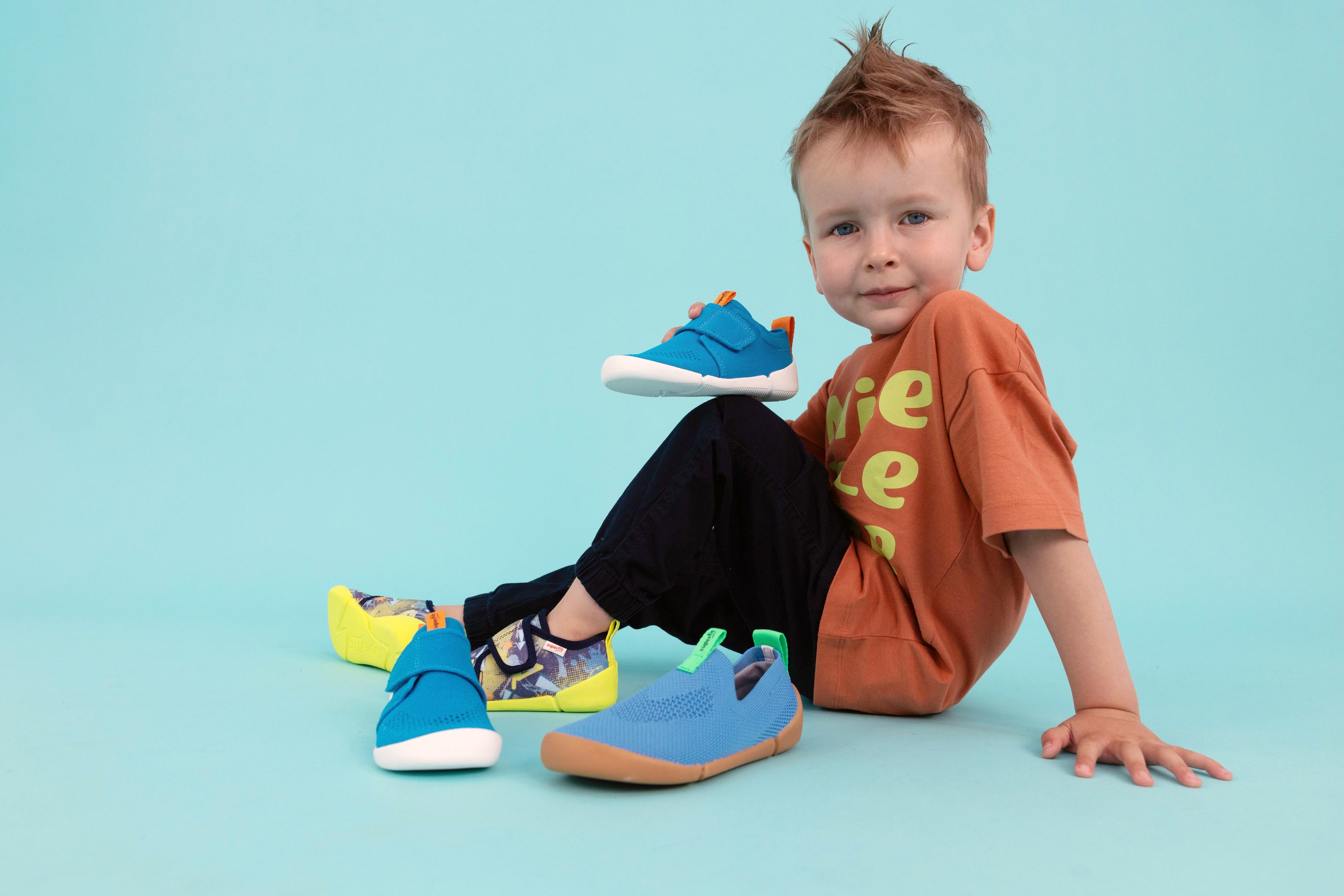
You order shoes according to the size you've always worn, and they still don't fit. Sneakers pinch your toes, while ankle boots needlessly slip at the heel. Most often, the problem isn't the size itself, but the fact that sizes vary between brands, and the only reliable common denominator is insole length. We'll explain what a shoe insole actually is, how to measure it, and where the most common mistakes are made.
What is a shoe insole?
The insole is the layer inside the shoe on which the foot rests. It evens out internal construction irregularities, cushions impact, and in higher-quality footwear, helps wick away moisture. In children's and orthopedic footwear, it is also often anatomically shaped – it follows the arch of the foot and supports its proper development.
Based on their design, we distinguish between:
- Fixed insoles – part of the shoe's construction and cannot be removed.
- Glued-in insoles – can be removed, but with some effort and risk of damage.
- Removable insoles – lie loosely in the shoe, can be easily pulled out, replaced with an orthopedic insert, or removed to dry after rain.
It is precisely the removable insole that manufacturers refer to when they talk about "insole length" for a specific size – and it's also the most accurate way to determine what shoe size you truly need.
How to measure the insole of shoes you already own
If you have a pair of shoes at home that fit you perfectly, you don't need to measure your foot. Just measure the insole directly.
- Remove the insole from the shoe. This only works for models with removable inserts.
- Lay it on a flat surface – a table or the floor.
- Measure it with a tape measure or ruler from the furthest point of the heel to the furthest point of the toe.
- Compare the resulting number in millimeters or centimeters with the manufacturer's size chart.
What if the insole can't be removed? Then you'll measure the shoe's interior indirectly. Take a thin straw or skewer, insert it into the shoe all the way to the heel, and mark the point where the toe ends. After removing it, measure the distance between the marks. It's not as accurate as removing the insole, but it's better than guessing based on the number on the box.
Important note: measure shoes that are not heavily worn. Older footwear stretches with wear, and the insole will then show a larger number than what the foot actually needs.

How to measure your foot's insole when you don't have shoes on hand
The second situation is different. You want to find the size of brand-new shoes, but you don't have any tried-and-true pairs at home to base it on. In that case, you don't measure the insole, but your foot, and you add a so-called allowance to the result.
Foot measurement procedure:
- Place a clean piece of paper on a firm floor, ideally right against a wall.
- Stand on the paper (or have the child sit) so that the heel is against the wall and weight is distributed across the entire foot.
- With a pencil perpendicular to the floor, mark the point in front of the longest toe. A diagonally held pencil distorts the result.
- Measure the distance from the heel (the edge of the paper against the wall) to the marked line in millimeters.
- Repeat the same procedure for the other foot.
- If the lengths differ, always use the longer foot.
For a more accurate result, measure your foot in the afternoon or evening – after a full day's load, it's slightly swollen, similar to how it is during normal shoe wear.
What is an allowance and why is it added?
An allowance is a reserve between the tip of the longest toe and the inner tip of the shoe. It gives the foot space to move when walking without the toes hitting the material.
For adults, it usually ranges within a few millimeters; for children, it is somewhat larger, because a child's foot grows quickly, and the allowance also serves as a small growth reserve.
The exact value varies by manufacturer and type of footwear, so it is always worthwhile to follow the specific size chart or calculator of the e-shop, not a general number from the internet.
Insole length = foot length + allowance.
How to do it for children: measuring a child's foot at home in minutes
For children's footwear, accurate measurement is especially important. A child's foot is softer and more sensitive to ill-fitting shoes than an adult's, and it also grows unevenly, often in spurts. It is therefore recommended to re-measure a child's foot every 6 to 8 weeks, as the foot can easily grow a full size in that time.
The procedure is essentially the same as for adults:
- Take off the child's shoes and let them take a few steps in socks so that the foot assumes its natural shape.
- Have them stand on paper, heel against the wall, weight on both feet.
- With a pencil perpendicular to the floor, mark the end of the longest toe. Repeat on the other foot.
- Measure the distance from the heel to the mark in millimeters and take the longer foot into account.
For Superfit children's footwear in our offer, you simply enter the measured value directly into the size calculator for the specific product. It will then recommend the correct size, including the appropriate allowance for healthy foot growth.
You can also roughly verify the size in the table by age:
Approximate size chart by age
|
The exact range for each specific size can be found in the Superfit size chart for individual models of children's footwear – whether it's children's sneakers, children's sandals, or children's winter boots.
Common mistakes when measuring insoles
- Measuring in the morning. After a night's rest, the foot is at its smallest during the day, so the result will be smaller than the actual need.
- Holding the pencil at an angle. Even a small angle can shift the mark by a few millimeters, which can mean a different size.
- Measuring only one foot. A slight difference between the right and left foot is completely normal – always use the longer foot.
- Measuring heavily worn footwear. A stretched insole will show a larger dimension than what the foot actually needs.
-
Ignoring foot width. Insole length only addresses one dimension. If the foot has a wider or narrower shape, it's worth paying attention to the shoe's width system, as with Superfit models with widths S, M, and W.